
ISSN: 2007-462X
UNIVERSIDAD AUTÓNOMA DE NAYARIT UNIDAD ACADÉMICA DE ODONTOLOGÍA DIRECCIÓN DE POSGRADOS
NÚMEROS
ACERCA DE
Distalización unilateral de molares superiores con resortes de Nitinol.

Resumen
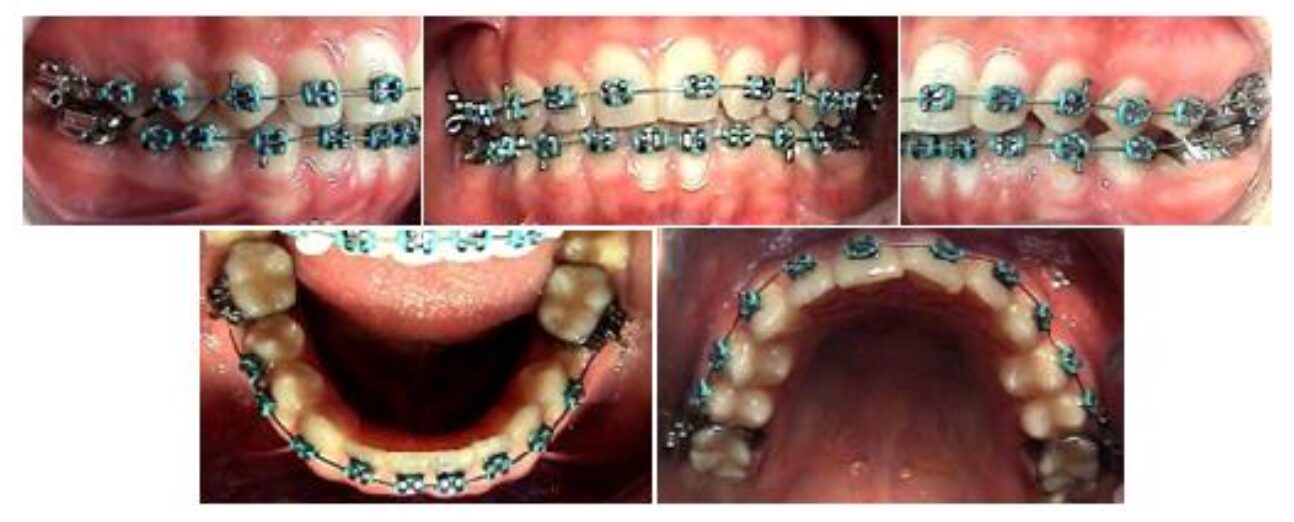
La distalización molar se ha convertido en una alternativa de tratamiento en distoclusiones causadas por mesogresión de los molares superiores, ocasionando una relación canina de clase II. Con el objetivo de demostrar como una alternativa viable la utilización de resortes de Nitinol como método de distalización unilateral en pacientes adultos, con presencia primer y segundo molar superior y el uso de elásticos intermaxilares con vector de clase II como método de anclaje, mostrando los cambios en la corrección de la relación molar y canina al finalizar la terapia de distalización con los resortes de Nitinol. Para cumplir dicho objetivo se presenta el caso de un paciente sexo femenino de 17 años 11 meses al iniciar la terapia de distalización, con un biotipo mesofacial y una relación dental clase II del lado izquierdo, con presencia de primeros y segundos molares en oclusión. Para la corrección de dicha relación dental se sugiere la colocación de resortes abiertos de NiTi entre cada órgano dentario, desde el segundo molar hasta el lateral y como método de anclaje los elásticos de clase II. Nuestros resultados confirman los de estudios similares previos, aunque difieren en la técnica de colocación de los resortes, se muestra como hubo una corrección en las relaciones dentales y poca perdida de anclaje aún que se haya hecho la distalización desde segundos molares.
Palabras clave: Distalizacion, resortes Nitinol, Clase II.
Abstract
Molar distalization has become a treatment alternative in cases of malocclusion caused by mesial displacement of the upper molars, resulting in a Class II canine relationship. The aim is to demonstrate the use of Nitinol springs as a viable alternative for unilateral distalization in adult patients with upper first and second molars and the use of intermaxillary elastics with a Class II vector as an anchorage method, showing the changes in the correction of the molar and canine relationship at the end of distalization therapy with Nitinol springs. To achieve this objective, we present the case of a 17-year-old female patient at the start of distalization therapy, with a mesofacial biotype and a Class II dental relationship on the left side, with first and second molars in occlusion. To correct this dental relationship, the placement of open NiTi springs between each tooth, from the second molar to the lateral, is suggested, with Class II elastics as the anchorage method. Our results confirm those of previous similar studies, although they differ in the technique used to place the springs. They show that there was a correction in the dental relationships and little loss of anchorage, even though distalization was performed from the second molars.
Key Words: Diztalization, Nitinol springs, Class II.